
Charting Risk: How Documentation Becomes Legal Evidence in Hospice Eligibility
Why your eligibility narrative often determines whether hospice stands… or falls.

The Audit That Didn’t Look at Care
A hospice nurse once managed a patient with advanced COPD. The patient was oxygen-dependent, cachectic, and declining. Everyone agreed: this patient belonged in hospice.
Then came a Medicare audit.
The denial letter didn’t question the care.
It questioned the documentation of eligibility.
“Insufficient evidence to support prognosis of six months or less.”
The nurse’s notes described decline—but not in a way that met regulatory expectations. The physician certification referenced “chronic illness” without clear trajectory. The recertification lacked measurable change.
The patient was appropriate.
The documentation was not.
And in hospice, eligibility lives and dies on documentation.
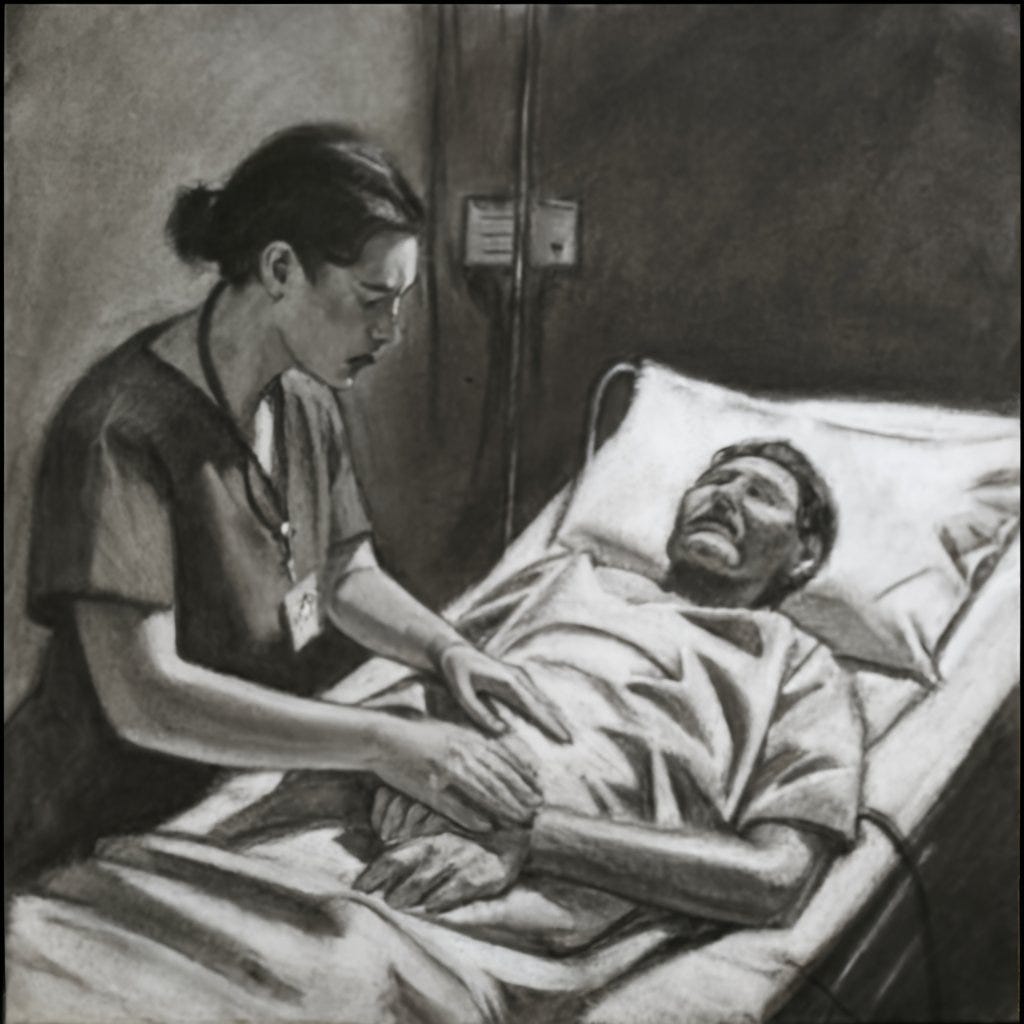
Hospice Eligibility Is a Story With a Deadline
Think of hospice eligibility like writing a clinical story with a very specific ending:
This patient is likely to have a life expectancy of six months or less if the disease runs its normal course.
Every note you write is a paragraph in that story.
But here’s the catch:
Auditors don’t see your patient
They don’t hear the breathing
They don’t feel the frailty
They only see the words
If the story doesn’t clearly show decline, progression, and prognosis, the case collapses.
The Three Chapters of Hospice Documentation
Eligibility documentation isn’t a single event—it unfolds across three critical points:
1. Initial Determination of Eligibility (IDE)
This is your opening argument.
You must establish:
Terminal diagnosis
Disease trajectory
Functional decline
Supporting clinical evidence
2. Ongoing Documentation (Between Certifications)
This is where many programs fail.
You are building:
Evidence of continued decline or poor prognosis
Not just care delivery, but disease progression
3. Recertification
This is your closing argument, repeated every 60 days.
You must answer:
Why is this patient still eligible today?
Not why they were eligible before.
Analogy: Eligibility as a “Time-Lapse Video”
Imagine taking a single photo of a patient, it shows illness.
Now imagine a time-lapse video, it shows decline.
Hospice eligibility requires the video, not the snapshot.
Your documentation must show:
Change over time
Worsening function
Increasing dependence
Escalating symptoms
Without that progression, eligibility looks static, and therefore questionable.
What Auditors Are Actually Looking For
They are not asking:
“Was the patient sick?”
They are asking:
“Can I clearly see a trajectory toward end of life?”
This means your documentation must demonstrate:
1. Functional Decline
PPS score decreasing
Increased ADL dependence
More time in bed or chair
2. Nutritional Decline
Weight loss (quantified)
Decreased intake
Dysphagia
3. Disease Progression
Worsening symptoms
Increased hospitalizations or infections
Escalating oxygen needs, pain, or cognitive decline
4. Comorbid Impact
How secondary conditions accelerate decline
These are required evidence.
Story: Two Recertifications
Nurse A documents:
“Patient stable. Continues to require hospice care.”
Nurse B documents:
“Since last certification period, patient demonstrates continued decline: PPS decreased from 50% to 40%. Now requires assistance with all ADLs (previously minimal assist). Intake reduced to ~25–50% of meals. Increased dyspnea at rest requiring escalation from 2L to 4L oxygen. Two episodes of suspected aspiration. Overall trajectory consistent with end-stage disease progression.”
Only one of these survives an audit.
The Most Common Documentation Mistake
Using maintenance language instead of decline language
Hospice is not about stability.
If your chart says:
“No change”
“Stable”
“Doing well”
You are unintentionally arguing:
This patient may not be terminal.
Even when clinically they are.
Reframing Your Documentation Mindset
Shift from:
“What care did I provide?”
To:
“What evidence did I capture that this patient is declining toward end of life?”
This aligns with broader healthcare expectations that documentation must clearly support clinical decisions and outcomes, not just tasks performed .
Practical Framework: The “DECLINE” Method
Use this to structure eligibility documentation:
D – Disease progression
What is worsening?
E – Evidence (objective data)
Weights, vitals, PPS, labs (if applicable)
C – Comorbid impact
How do other conditions contribute?
L – Loss of function
ADLs, mobility, cognition
I – Intake/nutrition
How much are they eating/drinking?
N – New or worsening symptoms
Pain, dyspnea, agitation
E – Events
Falls, infections, hospitalizations
If your note hits these elements, it becomes defensible.
IDG Notes: The Hidden Risk Zone
Interdisciplinary Group (IDG) documentation often becomes a weak link.
Why?
Because it:
Summarizes care
But doesn’t always restate eligibility
Every IDG note should reinforce:
Why this patient continues to meet criteria
Think of IDG as the committee voice validating the trajectory.
Recertification: The Legal Pressure Point
Recertification is where most denials occur.
Why?
Because the expectation shifts from:
“Prove they were eligible”
To:
“Prove they are still declining”
This requires:
Comparison to prior period
Clear trajectory language
Updated clinical evidence
Simulation-based training programs increasingly emphasize documentation clarity, audit trails, and rationale for clinical decisions as core competencies for safety and compliance .
The “Copy-Forward” Trap
One of the most dangerous habits:
Copying prior notes and changing a few words.
Auditors look for:
Repetition
Lack of progression
Contradictions over time
Copy-forward documentation signals:
No real change has been assessed
Which undermines eligibility.
The Ethical Layer: Truth vs. Translation
Here’s the uncomfortable reality:
You may know the patient is dying.
But if you don’t translate that truth into measurable, observable, documentable evidence, it doesn’t exist in the legal record.
Ethical documentation frameworks emphasize:
Transparency
Accountability
Clear rationale for decisions
These are are compliance requirements .
Final Thought: Eligibility Is Built, Not Assumed
Hospice eligibility is not a one-time decision.
It is a continuously constructed narrative.
Every visit note, every IDG discussion, every recertification contributes to answering one question:
Can an external reviewer, who has never met this patient, clearly see that this patient is on a trajectory toward end of life?
If the answer is yes, your documentation protects:
The patient
The program
Your license
If the answer is unclear, everything is at risk.
References
Centers for Medicare & Medicaid Services (CMS). Medicare Hospice Benefit Policy Manual. https://www.cms.gov/medicare-coverage-database/
National Hospice and Palliative Care Organization (NHPCO). Hospice Documentation and Eligibility Guidelines.
https://www.nhpco.orgPalmetto GBA. Hospice Eligibility and Documentation Requirements.
https://www.palmettogba.comAmerican Academy of Hospice and Palliative Medicine (AAHPM). Prognostication in Advanced Illness. https://aahpm.org
**Look for my next article tomorrow “When Nurses Are Named in Fraud Cases: What Went Wrong”. Thank your for your readership.